For 25 years, the Little Bit Foundation has been helping students throughout the St. Louis region overcome barriers that stand between them and a quality education. What started with a simple coat drive has grown into a comprehensive “Whole Child” model that supports students with basic needs, academic enrichment, wellness resources, family support, and college and career readiness opportunities.
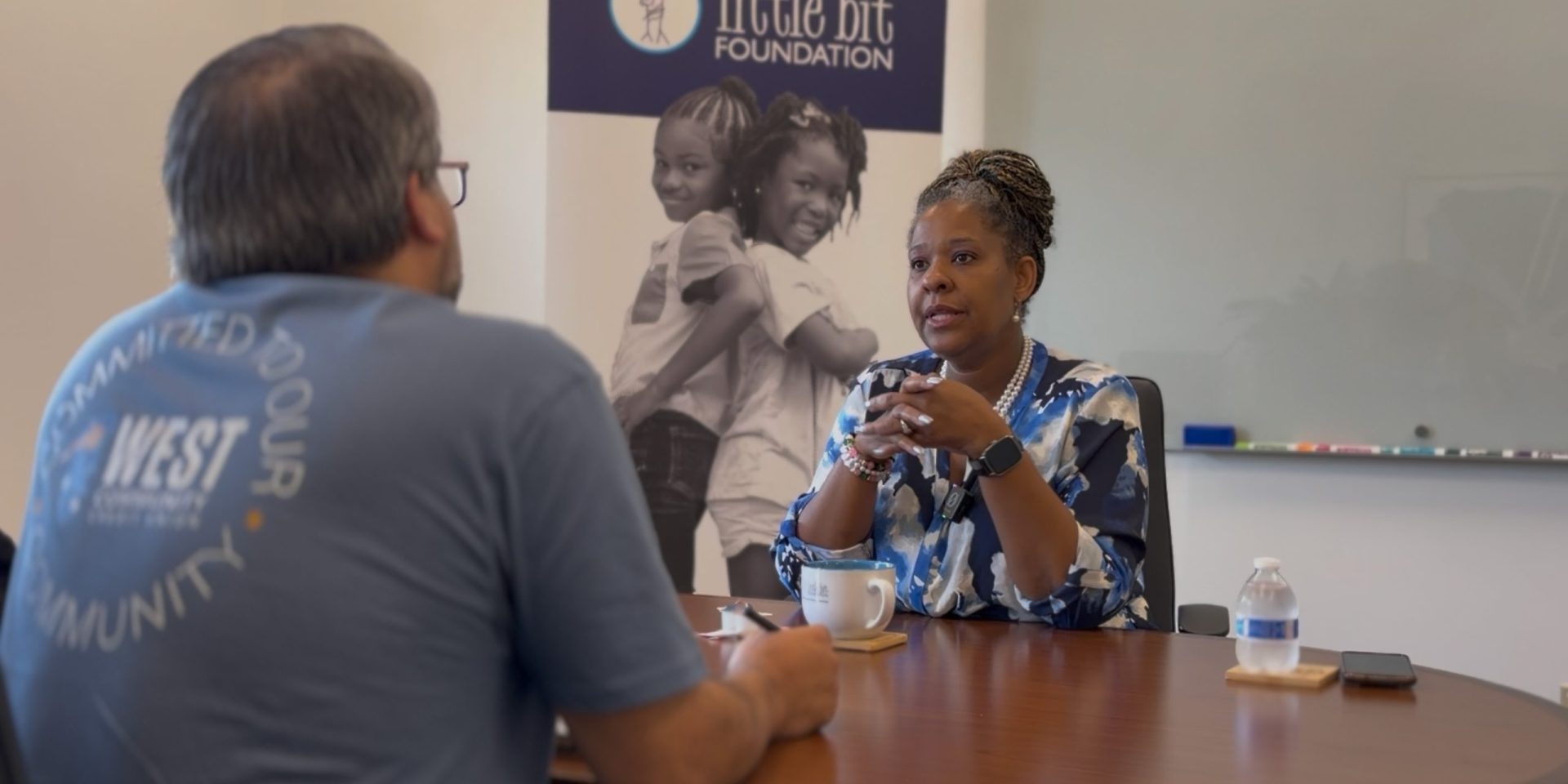
In this episode of Banking on St. Louis, Josh Rodriguez visits Little Bit’s headquarters and meets the people behind the mission. From warehouse staff and volunteers to CEO Miranda Walker Jones, each shares why supporting children goes far beyond providing supplies. The conversation explores the foundation’s origins, its response to major crises including the 2022 flood that destroyed its headquarters and the devastating 2025 St. Louis tornado, and the daily work required to meet students where they are.
Little Bit Impact By the Numbers
- Served more than 17,000 students
- Supported children across 60 schools
- Reached families in 40 ZIP codes
- Distributed more than 135,000 clothing items and pairs of shoes
- Provided over 62,000 backpacks and school supply kits
- Delivered nearly 40,000 personal hygiene products
- Distributed almost 20,000 coats, jackets, and winter items
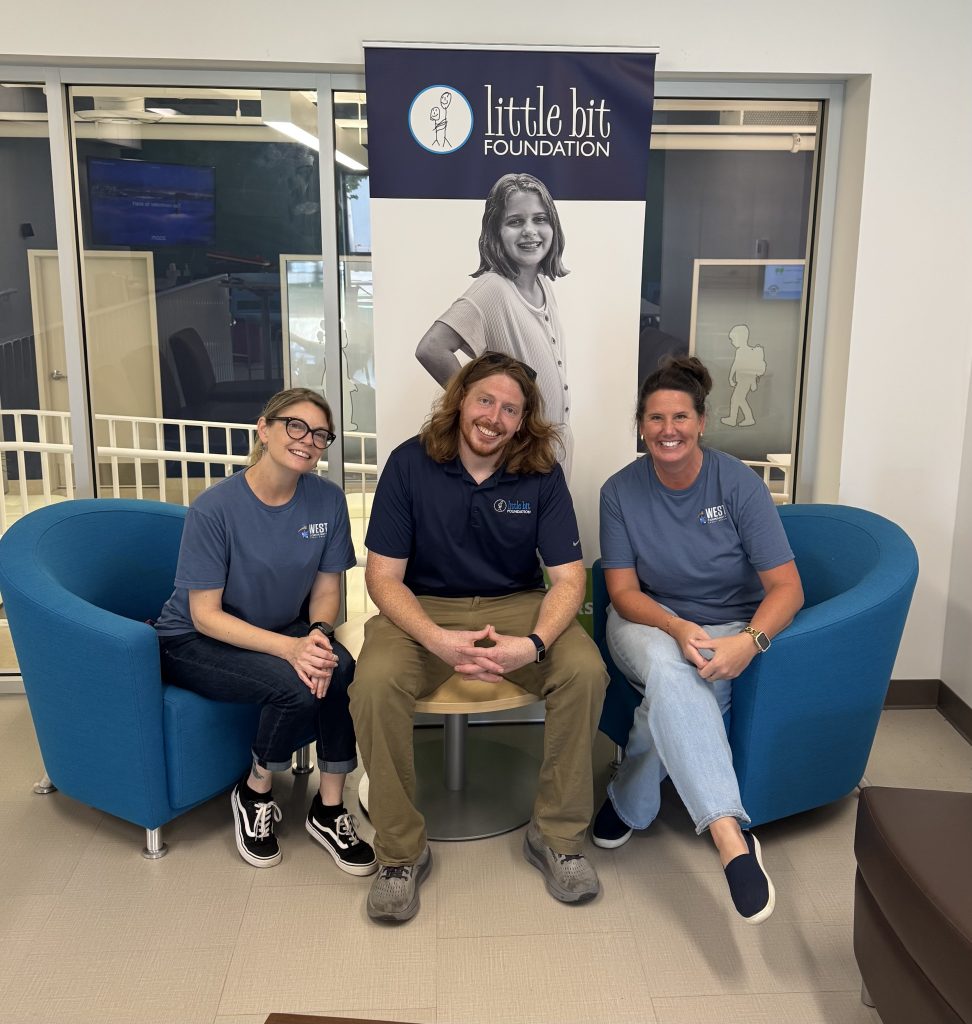
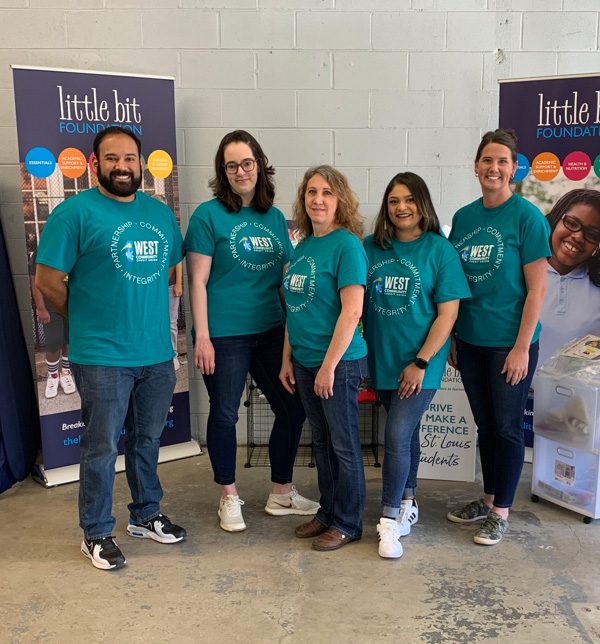
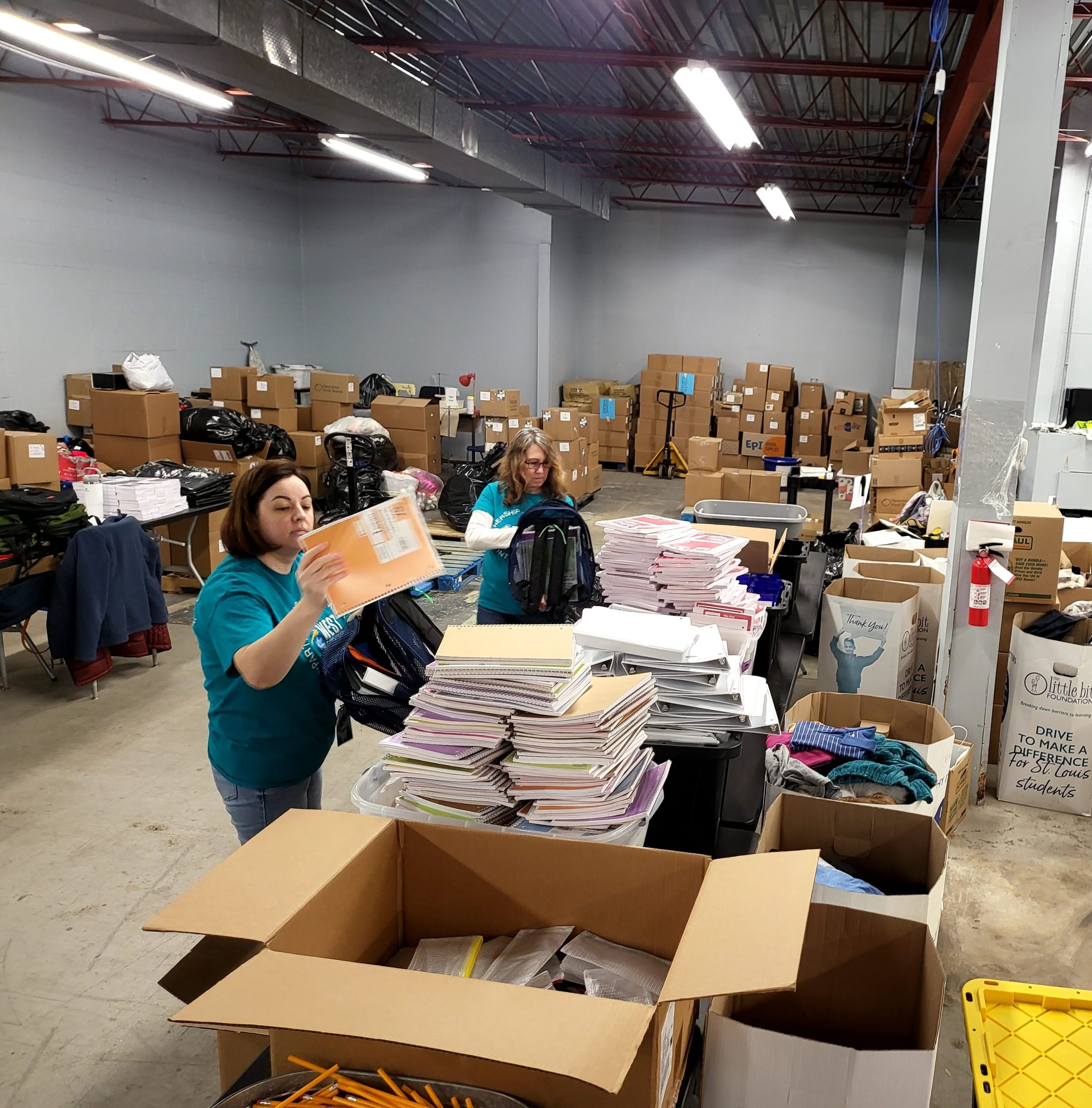
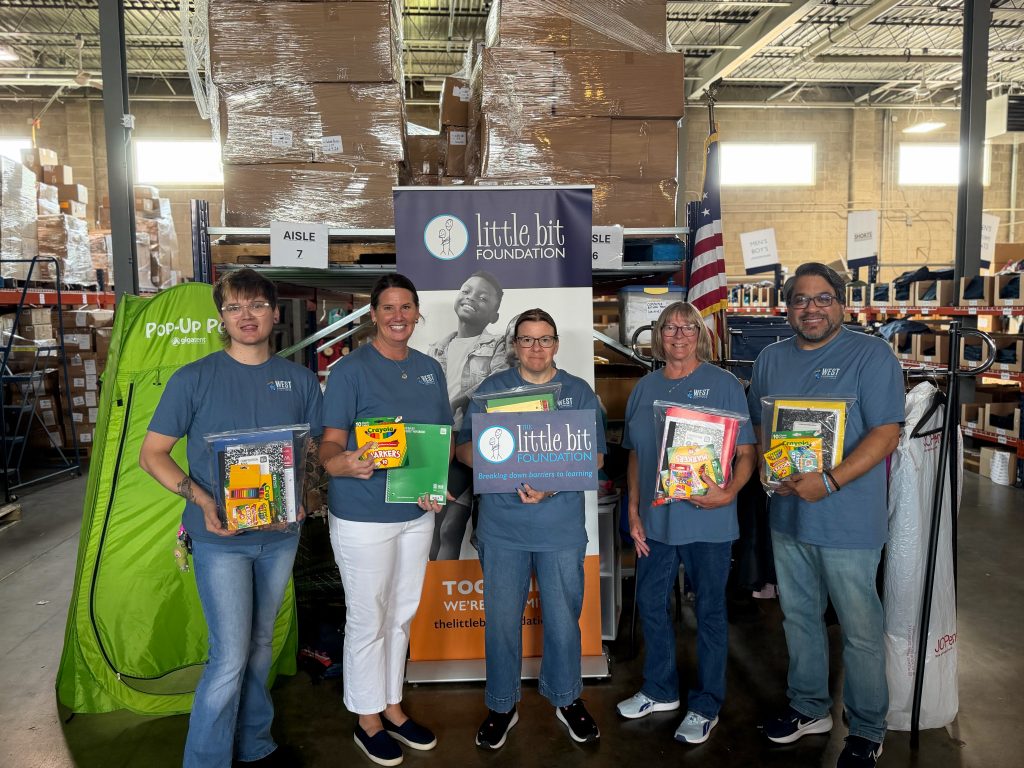
West Community’s staff has logged 448 volunteer hours and counting since 2021, sending volunteer groups monthly to help out at the warehouse as well as seasonal fundraising and donation drives.
Discussion Links:
“Waiting for Superman” trailer
The Little Bit Foundation
Bethanybaldwin.com
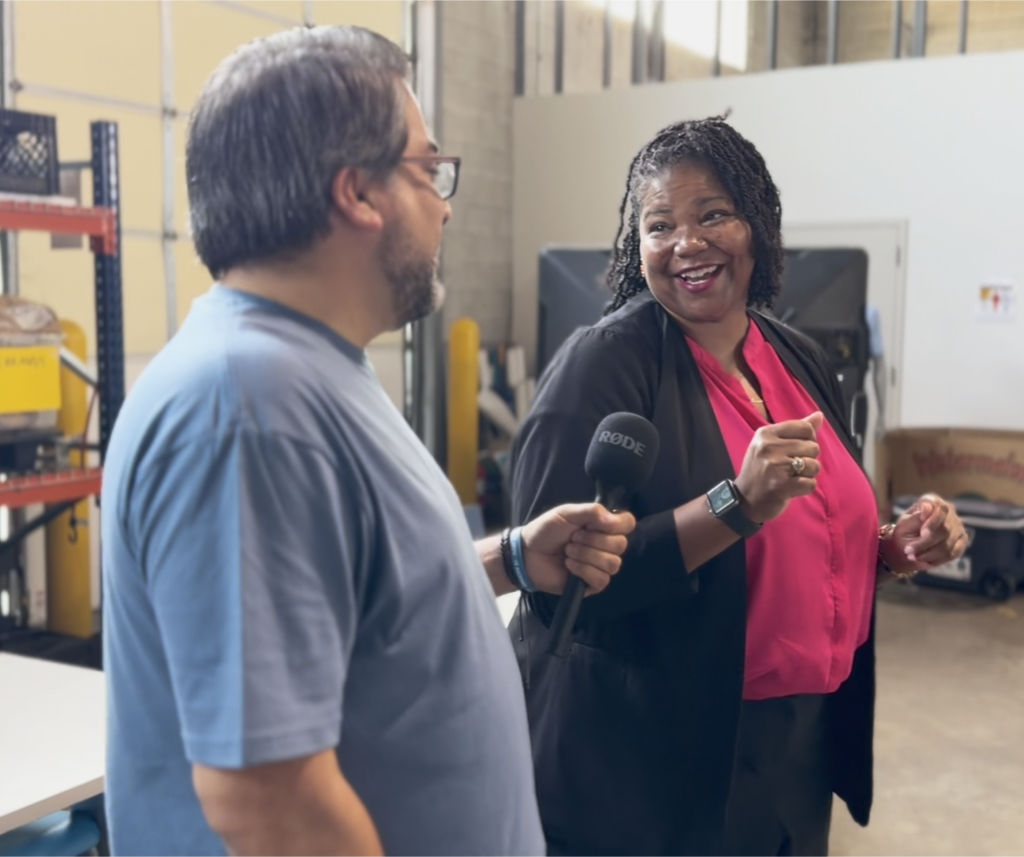
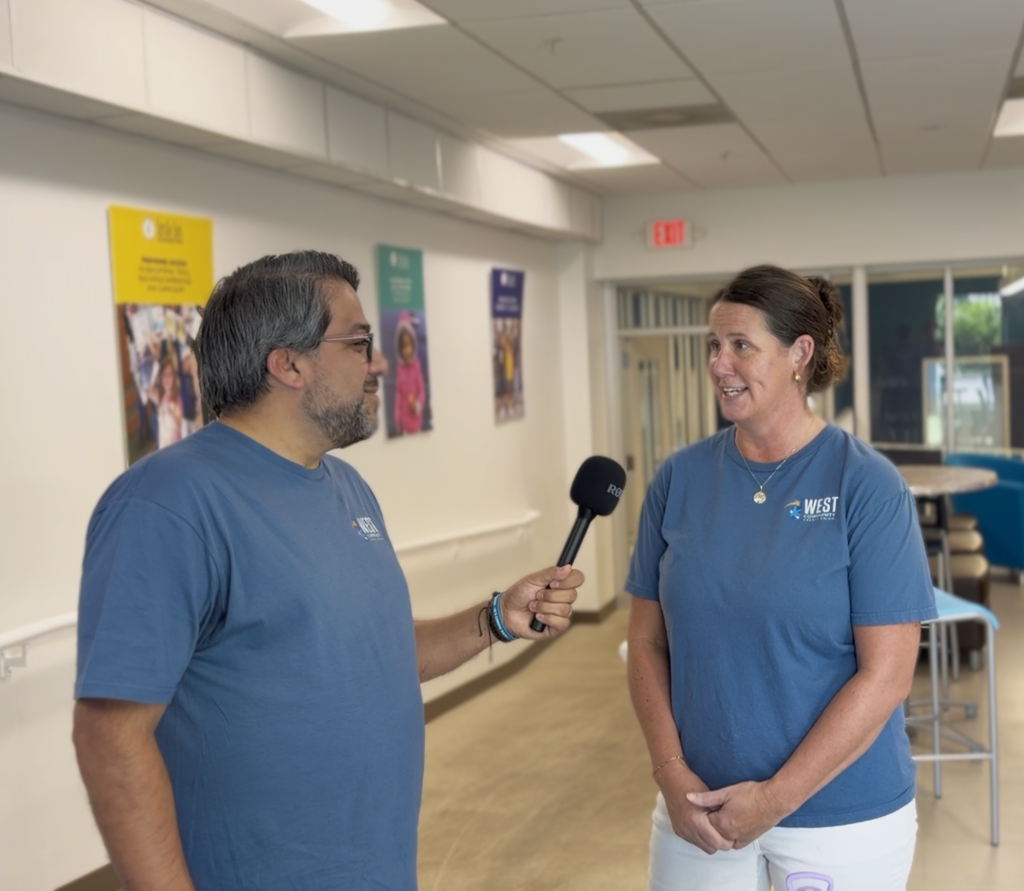
Special thanks to the Little bit Foundation employees interviewed:
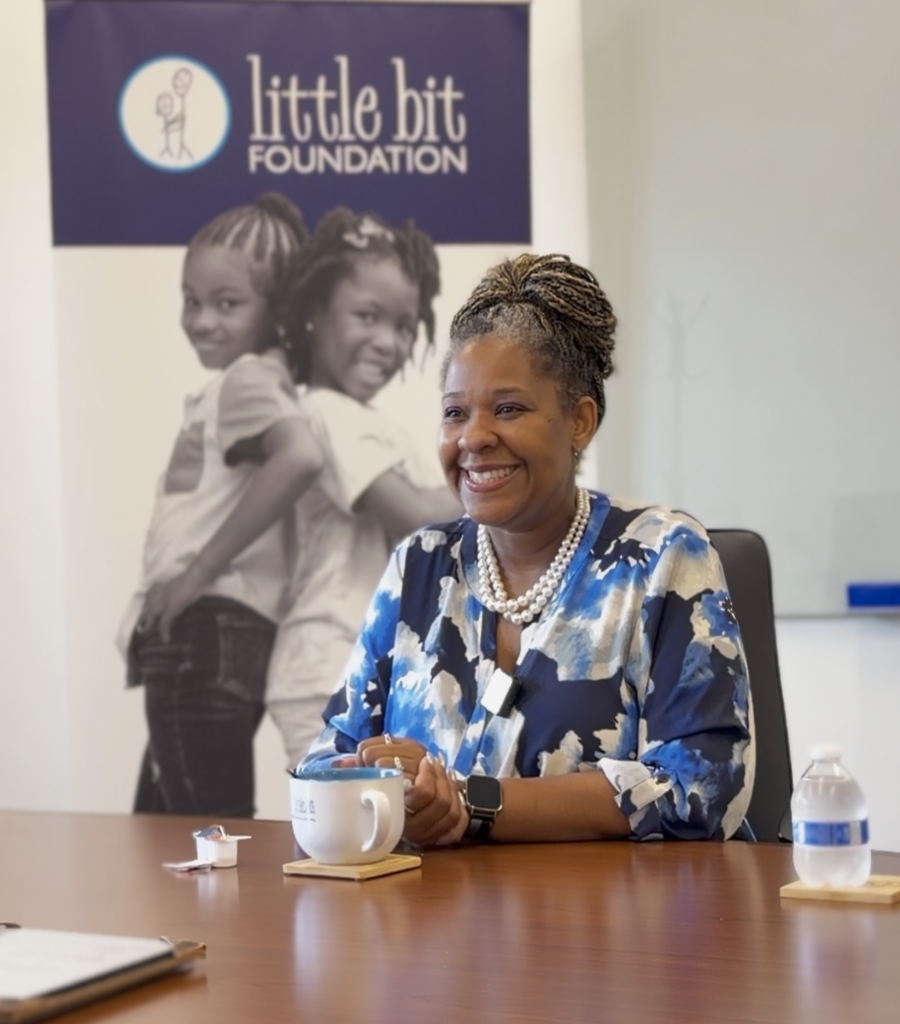
Miranda Walker Jones, CEO
Shelly Williams, VP Impact and Community Engagement
John Pimmel, Senior Director Strategic Partnerships and Community Outreach
Dale Nunley, Director of Operations and IT
Tristan, Program Coordinator
Thomas, Warehouse
How to Listen:
Subscribe on your favorite podcast player so you never miss an episode:




Follow Banking on You Podcast for updates and past episodes:
Facebook | Instagram | TikTok | Threads | LinkedIn
Banking on You is powered by West Community and Tigers Community Credit Union.
Transcript
Host Josh Rodriguez
This is another episode of Banking on St. Louis, a banking on you series about the people and organizations helping shape the St. Louis metropolitan area. For 25 years, the Little Bit Foundation has been showing up for thousands of students across the St. Louis metro area. Today we’re meeting some real life superheroes who don’t wear capes. No capes. And I didn’t happen to see anyone in red mid-calf boots either.
While the rest of us are waiting for the man in red tights to save the day, these superheroes have already arrived. They’re doing a little bit here and a little bit there. Until it adds up to something huge. I’m Josh Rodriguez. This is the Banking on You Podcast. Thank you so much for joining us.
Miranda Walker Jones
So Rose Hanley and Elise Tierney, they were both soccer moms and they were doing a co-drive for their kids’ soccer team.
Josh
That’s Miranda Walker Jones, CEO of the Little Bit Foundation.
Miranda Walker Jones
The way the story is told is that when Rose walked into a school is that she actually saw a kid that had on his father’s coat because he didn’t have one of his own. And the dad went without a coat. And when she came in there and he got a coat for his own, the little kid said, Well, I’m so excited because now my dad can be warm too.
Josh
Every superhero story begins with an extraordinary event. Superman’s home planet of Krypton explodes. Peter Parker gets bitten by a radioactive spider. Bruce Banner survives a gamma ray laboratory incident, becoming the Hulk. Well, not this time. Just a coat. One child with a Simply met by someone who chose to no longer ignore the problem.
Miranda Walker Jones
And that that just, you know, struck something in her heart. And she said, you know, I’ve gotta do more. And that more was, you know, getting her friends together, getting more copes, going into the schools. It started simply grassroots. And then our history w went from us having, you know, like in their basement to a closet at CBC to a another room at Mercone. And then we ended up with another bigger storage room at Color Art, which is now called Sarcadia. So we moved, you know, other businesses kinda, you know, got gave us a room.
Josh
Batman had the Batcave, Iron Man his workshop, Xavier the X-Mansion. Little Bed had borrowed storage rooms, basements, and closets. Not exactly the Batcave but you get the idea.
John Pimmel
our entering our twenty-fifth year of existence. This is our headquarters. The most recent one got with five feet of water during the the flood earlier this well I guess three years ago something like that. but we’re very happy in this new space and I’m gonna kind of take you through and show you the different pieces of what we do here. So this is our program side. So each of these cubicles represents a different part of our service wheel.
Josh
Twenty-five years later, a coat has become what LittleBit calls the whole child model. That’s the service wheel you just heard John Pimmel, Senior Director of Strategic Partnerships, mention. It includes academic enrichment, health and nutrition, college and career readiness, wellness and family support, then essentials. You can check out their website, thelittlebitfoundation.org, for more information about each area.
Over a quarter century, that one coat became books, shoes, school uniforms, school supplies, career fairs, robotics teams, family support systems, entire school partnerships, district wide improvement efforts? Amazing. But every superhero story reaches an inflection point. The all is lost. Hold your breath moment where it seems there’s no way out. Certainly, it’s all over. You know the moment. That’s when the story gets good.
Miranda Walker Jones
So it was July 2022. So it was crazy because I started here in November, November 15th, 2001. So I had about eight months of CEO. And I was so excited because when I came in, we were renovating our building in Brentwood. So it was fresh, brand new. In fact, we had just gotten these etchings that we see on the wall here. We had just gotten them on the building there. We had our open house in May. Imagine May, we have an open house. In July, we lost everything.
Josh
You know it’s funny, no one puts out the call for superheroes when everything is going well. But what happens when the Bat Cave floods? Hmm.
Miranda Walker Jones
When when we talk about the flood, it was four and a half feet of rushing water. So it was on top of desk. If you left your computer there, it was gone. and because we work with kids, all of the supplies, this is creek water, it came out of the Black Creek. So you have to get rid of all of those things. So it was really tough. and we couldn’t go back in that building. It flooded again two days later. So we knew then that we had a real serious situation. We moved out here to Maryland Heights about four years later.
Josh
On May 16, 2025, a two-mile-wide EF3 tornado ripped across North St. Louis, leaving destruction and devastation in its wake. We covered it extensively last season in our Banking on St. Louis Part 2 episode. You might want to check that out. That would have been a perfect time for Superman to arrive and punch the whirlwind with fists of fury. Didn’t happen. But…
Miranda Walker Jones
We responded the very next day. We said, hey, tornado happened May 16th, May 17th. We had our truck loaded up. We went to Costco’s, loaded that truck up with water, whatever supplies we could get. We rode, you know, through the neighborhood, delivering water to different people. We had conversations with our board. We started getting power banks because we knew that people were that because electricity was out for so long. So we started to just collect small things and it started off with small stuff, and the next thing we knew, we were kind of a clearinghouse.
Where people were donating stuff for us here at the office and we were taking it down. So we started doing resource hubs in St. Louis Public Schools where we would actually do case management with all the families that were there, make sure they had what they needed, have a resource right there where they could get toiletries, they could get paper supplies. we started helping them with housing. We worked alongside the school social workers in St. Louis Public Schools and in Confluence to make sure that the kids were taken care of.
That was our initial response, and then we had to get everybody ready to go back to school. About halfway in the school year, St. Louis Public School said, hey, we have about 500 kids that did not re-enroll. And so we started working with the St. Louis Regional Rapid Response Team out of the St. Louis Community Foundation, as well as the St. Louis Education Fund. And our case managers actually went down and called every single family to find out what happened to those families. A lot of them were in other districts, in other neighboring districts.
And maybe it just didn’t ca it it didn’t show up right on the, you know, on some of the the school registers. Cause we were thinking, hey, if if they’re going to another school, they have to get all the paperwork from St. Louis Public Schools. But because of the tornado, a lot of school districts just took these other kids so that they would have someplace to go. But there was a lot of couch surfing, you know, families staying with other families that were nearby. Some people left the area off but a lot of them literally lost their entire home. And so they had to r to re route, you know, someplace else. All those neighborhoods that were directly kicked. a lot of those kids just did not return to those neighborhood schools.
Josh
Funny thing about superheroes, they show up when things get hard. They don’t wait for permission. They don’t wait for perfect conditions. They just show up and get the work done. And sometimes they anticipate the need well before anyone else thinks there’s a problem.
Miranda Walker Jones
Those five different areas that we serve are very intentional. You know, it’s really trying to touch all the kids’ lives emotionally, physically, academically, making sure that they’re having solid well-being so that they can grow, turn around, and become productive citizens of this community. Yeah, Maslow’s hierarchy of need, right? Making sure that the base is taken care of so that you can get to those higher things. It’s kind of like if you’re sitting there and you have an itch, you can’t scratch it. It’s like, my God. You’re not concentrating on anything else, it’s that itch. Nothing else matters. Nothing else matters. And so if it’s the hunger, if it’s the itch.
Josh
Life outside the classroom is difficult for many of these kids. It makes learning inside the classroom complicated, at times even impossible. Miranda is referring to Little Bit’s whole child model, which we mentioned earlier. Five areas of support so students are in a better place to learn food, clothing, academic support, career readiness, family support.
Miranda Walker Jones
You know, we also find behaviors. When you talk about, you know, how many kids said that they were bullied because somebody’s picking on them because of their shoes, because they didn’t have the proper shoes. You know, their hygiene wasn’t what it needed to be. And then they had to fight back because of they felt bullied. And being able to go to school with the right hygiene, with proper gear, you know, it lessens the opportunities for you to get picked on and bullied. It it helps with the behaviors. There’s so many layers to what we’re doing.
Josh
Think back to middle school. Yeah, you remember that kid. In my class his name was Tony. The one that wore ill fitting second hand clothes and face always smudged and sometimes grimy, his hair rarely combed. Honestly just didn’t smell great. Someone everyone noticed for the wrong reasons but chose to ignore. Yeah, everyone except the bullies.
Yeah, taking care of those simple things that a lot of us take for granted, when you think about it. But taking care of those things removes that that incentive for a bully to say, Hey, your hair’s messed up or hey you smell whatever whatever it might be. Yeah and suddenly their that plane feels evened out and then that level of bullying comes down. I don’t know that I’ve ever heard about that from any study or any you know, any non profit, any group that something so simple could be the resolution if to very…
Miranda Walker Jones
A hundred percent. I had a a grown man who came in here and he was in the warehouse and he was like, my God, I got so bullied when I was younger and I you know, my mom, I had one pair of shoes, it had a hole in it. If I had had something like this, and he said I fought my way through school. That’s where that inspiration for me, he said I fought my way through school because of what I didn’t have. He said, If I had something like this it could have really changed my life. And I said, Wow, you’re you’re absolutely right. How many kids out there are fighting, you know, like you know, trying to maintain their dignity through all the other things that they don’t have. I mean, but what is happening to that kid that’s causing them to be in the situation.
Josh
A few hygiene products wouldn’t have solved everything for Tony, but they may have changed how he felt walking into school every morning.
Miranda Walker Jones
Hundred percent.
Josh
Iron Man’s nanobot exoskeleton armor, powered by his high-yield arc reactor, comes in handy when alien hordes invade. Thor’s indestructible hammer or Captain America’s Vibranium Shield seem to work well when saving the day on the silver screen. Not so much in the real world. Most of the problems kids face don’t require superhuman strength or genius level inventions. Kids need food. Kids need shoes. Kids need dignity and self-respect. Kids need someone to take notice and take action. The Little Bit Foundation isn’t out to beat the Mad Titan. They’ll leave that to the Avengers. But they are breaking down the barriers between kids and a better education. Little bit by little bit.
These heroes definitely don’t wear capes. They wear volunteer t shirts, business casual, work gloves, blue jeans, whatever the job requires.
Lori Hudson
Well, it’s been a great partnership we’ve had. We’ve been volunteering here for many years. Not only do we come monthly to volunteer in their warehouse, but we support some of their other fundraising events like their trivia night that they do annually every year in the beginning of the year.
Josh
You remember Lori Hudson, Community Engagement Manager, West Community Credit Union. She’s been on the show several times. We’ve been volunteering monthly with the Little Bit Foundation since 2021. Since then, we’ve logged close to 500 volunteer hours with them. One of our closest community partners.
Lori Hudson
contest and it’s really a lot of fun. Everything that they do aligns with our mission about giving back to our communities that we serve
Stan Nunley
next week I’m coming up on my three year anniversary.
Josh
And Stale Nunley, Director of Operations and IT. So anything that comes in from donations to distributing it.
Stan Nunley
to purchase items out to the schools. That’s what I’m in charge of. And then all the IT stuff here. We try really hard here. So when we what their favorite color is, any style preferences, what need it will do the best what the child wants while we’re still fulfilling. one kid and blue, and by chance we had some red and blue feet that day, so I was able to give him those. We might not be able to do our best to get as close as we can to what we want to their needs. Kid, he really liked the color. He showed me how high he can jump, showed me how fast he can jump. It’s one of those little things that it makes every day a little bit better just remembering that closer over there. I gave her one of her first coats. Kids smile. the young lady actually on that post And she was just the sweetest, nicest young lady. Lady. she even wanted to try on like a three X coat to see what it felt like and she was just the sweetest little young lady I ever So i it does bring a lot of joy to your heart and worth it when you think of all the stuff you do and when you see the actual impact, it really helps out. And it makes the mission.
Thomas
How are you? I’m fine. Yeah. But yeah, I’m the back to school supplies here, of course, and scared.
Josh
This is Thomas. He works back in little bits works. I think it’s because it’s very good leadership.
Thomas
just material conditions for a lot of these to try and help them. That’s what’s most important to me. Like Focusing on the material a lot of these students and family to me and kinda like what gets me coming. I mean, obviously feels very good. but yeah, just you know, I a lot of stuff work through and stuff with my own van. Very big fan of fads issues. Like fruits and hard work. I would say. Like it’s had a lot like for my life that I would with my own family, so just paying it forward shouldn’t just be me enjoying support. I should pay that so the kids can actually receive
Mike
So I’ll give those benefits as possible.
Josh
Mike leads LittleBit’s robotics team programs. It’s amazing stuff for kids who wouldn’t have these opportunities otherwise. Mike loves what he does. So I
Mike
Actually, started working, I well started as a volunteer at Little Bit Foundation in like 2019. And then I ended up working for the Little Bit Foundation for two years while I was in school getting my electrical engineering degree. I went to an local engineering firm and worked for two and a half years as an engineer and a project manager. And then I just came back a few months ago to continue doing STEM stuff here. Ideas like the concepts, the the programs, I didn’t really, they weren’t available to me when I was a kid. I didn’t really know that much about it.
And I feel like for a lot of kids, there’s like this barrier or a fear of getting into that field because they don’t think that they’re able to do it. And I feel like if you get started young enough and realize that it’s actually cool and fun and interesting that it kind of like removes that hurdle and can kind of get them going at a young age. ‘Cause I feel like a lot of what keeps people back from wanting to get into engineering or something like that is like fear. It’s it’s hard, it’s I don’t know, there’s a lot of math involved and that scares some people away and I think it’s just introduce them that it there is math involved but also it’s fun. Like we’re just like building robots and completing missions. Like it’s it’s a game.
Speaker
It’s so when we get a school they’re assigned a day Monday through Thursday. And we’re there every week throughout the school year and we see any kids that may need any items. School supplies, backpacks, everyday clothes, uniforms, shoes, coats, anything like that. So those items we bring new and then while they’re there we check the boutique if they need any like hygiene kits, underwear, socks, different things like that.
Josh
How do you help kids that are embarrassed or not wanting to ask or some don’t want help? How do you how do you reach those that r and then really need help but they’re kind of resistant to it?
Speaker
So we work with each school, we have a liaison that we work with. So we work with the liaison so they’ll come up with like a list of kids that they’ve noticed that like maybe they in the same clothes throughout the week and they’re like I’ve noticed you’ve been wearing the same shirt a while, let’s do a new shirt or something. So we work with them, we work with the teachers and everything. So sometimes it’s as simple as give it to the liaison and they may put it in a kid’s backpack or call them down separate at a different time when we’re not necessarily there and calling twenty kids at at the same.
Josh
So you kinda like ninjas then just think yourself.
Speaker
We can be. Yeah. And one of the things that our program coordinates do a wonderful job is is embedding in school communities so that we develop relationships not just with the students but with the teachers. So anybody every child has a a special relationship with a building with a child with a an adult in the school. And so we there so that a trusted adult can make that referral so that child feels safe. We really embed ourselves.
Shelley Williams
So our distribution team works out of this space here. So you’ve got…
Josh
One of our hosts was Shelley Williams, VP of Impact and Community Engagement. Shelly is fully dedicated to helping the kids of the St. Louis metro area.
Shelley Williams
We try to also make sure that we get stuff that they like. And then our program coordinators and our school rep volunteers are incredible about making sure that the kids receive like very specific items to them. So if we know that there’s a little girl that loves pink, pink shoes, we try to make sure we literally come in here and get her her pink shoes. There are some kids that like have special like they love Sonic and we had Sonic shoes in, so we made sure that those kids got the Sonic shoes in.
When they like try the shoes on for the first time, and I’ve I’ve only done this a couple of times because that’s not my role to do that here, but they’ve been on the playground and they’ll like go. And we’re like, all right, Joey, time to you know, come get your shoes, they’ll try them on. I’m like, all right, let’s see how they work, and they’ll literally take off, like do a couple laps around like the playground. I’m like, I’m jumping higher. And I’m like, you are jumping higher. Running faster. Yeah, they’re like, these are like my Superman shoes, and it’s it’s the cutest thing ever.
Josh
So maybe we were a little bit wrong. Superman did show up after all. Well, at least his shoes did.
Miranda
That that’s something I feel really passionate about is that if you really understand where a person came from, then you can really serve them a lot better.
Josh
Let’s get back to Miranda, Little Bits CEO. If anyone has an origin story, it’s her.
Miranda
It’s different to, you know, know to say, somebody’s hungry and I wanna feed them. It is different when you know what that hunger felt like, right? So for me, you know, I grew up in East St. Louis, single parent, you know, lived in a room, my we had a bunk bed, my brother and I were in a bunk bed and my mom was in a single bed. So understanding, you know, that there’s an organization that could have given my mother just a little bit of help so that, you know, it wasn’t a it wasn’t a choice between buying food or buying School clothes, that hey, school clothes are covered, so we know we have enough to eat. Like those types of things. I remember my mom counting out pennies one day to get a box of rice.
Josh
She can genuinely feel the needs of these boys and girls because she’s walked in their shoes. Yeah, those embarrassing ones with the holes.
Miranda
So, you know, those types of things, understanding, you know, the kind of dignity, the empathy, because no matter what, my my mother always taught us to be proud, to be strong, to, you know, work hard. We worked, probably worked so much harder because we were trying to, you know, change our circumstances, our life circumstances and understanding how to bring that out of kids is is just so vitally important to me.
I don’t know if you can teach it, but I there’s a we have a staff person here, totally different background circumstances. but she is so empathetic. You know, she she understands, she she takes clues from those that are from the particular neighborhoods. You know, we we talk about it, we work together, we we play together, we learn together. And I think, you know, you don’t necessarily have to be from the neighborhood in order to give back to the neighborhood because you know, we’re all human beings, right? And I think that that condition that you see in someone that, you know, you know that they’re in need of something in order to fill that need. I don’t know that you have to have had that need all the time. It just look it just shows up differently. it it might not be face to face with the kid, but in terms of making sure that we are doing the drives, that we’re, you know, raising the money, talking to corporate partners because she knows that the work that she does allows all the other people in this organization to do the work that they need to do. So everybody plays a vital part.
As I said, we are all human and making sure that, you know, I think that all people are, you know, good in in nature and in heart. I’m a car carrying optimist club member. So like for me, it’s always what can we do to make this world better? And I feel like all the people that are on our board, no matter where they came from, no matter what their corporate background is, is that they understand that if we don’t do better by our children, that we don’t have the future that we want to see going forward. Right? So we can’t even hire people in our own backyard because they’re not prepared for these jobs, right? So that’s what is gonna drive a lot of corporate partners, is that we have to understand that our workforce is dwindling. And you know, more people in the state of Missouri are being are dying than they are being born. And so when you have this population decline and all this shift and different things happening, and we have a population here that is underprepared to take the jobs of the future. So I think that’s the biggest thing is that all these corporations have a stake in what we’re doing because we have to prepare our kids to be the leaders of our future.
The St. Louis American is the the largest African American newspaper in the United States of America. And they had a Reader’s Choice Award. This is the first year that they did that. And they had people vote for their nonprofits. They had about 900 categories, I promise you. It was 900 categories. They had a category for best restaurant, best haircut, best whatever you can think of, best dentist. If you think of it, they had it. And they had one for best local nonprofit, and we won.
You know, it’s really exciting for us because it means that people are seeing the work that we’re doing. They voted for us to be this best nonprofit. it it it just means a whole lot for us for such a historic newspaper and for the people to recognize us in that way. We feel good. However, you know, it’s the ongoing work. So I yeah, I feel good. I know we’re making an impact, but I’m like, there’s so much more to do. And I feel like we’re just at the tip of the iceberg of what we can do as an organization. You know, I’ve seen us grow so much in the last, you know, 25 years and in the last years, you know, after that turn of COVID and our and and we said that, you know, we really want to get into college cure readiness, you know, academic support, all these things that we’re doing, but we’re just at the tip of the iceberg. We have so many ideas and programs to come in the future.
So so I’ll tell you one of the things that we’re gonna do this year. There are so many amazing authors in St. Louis. And so we’re about to do an authors tour. we have one of our students that was part of a little bit in high school and she’s written two books now. So our plan is to to make sure that we get her in front of the kids reading these books and making sure that they have these books in their hands so that they can see that, you know, anybody can be an author, write books, get excited about reading. So that’s one of we’re excited about our twenty fifth anniversary because we’re able to bring back our founders and all those people that helped start this organization and really celebrate them.
You know, right now we are waiting to see what happens with the schools and the realignment with the schools because we know that our services may need to be rearranged or realigned with the the different the things that are happening in the schools. So those are some of the things that we’re kind of waiting to see, you know, what what the school systems look like so we know how to better respond.
Josh
Twenty-five years ago, it all began with a simple coat drive. Today, the LittleBit Foundation serves more than 17,000 students across 60 schools and 40 zip codes. 135,000 clothing items and shoes have been given out. 62,000 backpacks and school supplies. Almost 40,000 personal hygiene products, and nearly 20,000 coats, jackets,
And other winter items. Big numbers. But numbers don’t change lives. People do. A volunteer packing a box. A donor giving $10. A teacher noticing a need. A counselor making a referral? A staff member showing up in hundred degree heat. There’s still a lot of work to do. But that guy in the ridiculous tights and red boots we’ve all been waiting for? I think we’ve established he’s not coming. The great news is we don’t need him. Because for 25 years, extraordinary people across St. Louis have been doing something far more powerful. They’ve been showing up. One little bit at a time. And for thousands of kids, that’s better than any superhero.
Are you interested in getting involved in the mission of the Little Bit Foundation? Well, there are plenty of ways you can help. Visit their website at thelittlebitfoundation.org/help to find out what you can do. Tights and red boots, not required. Special thanks to voice artist Bethany Baldwin for providing our superhero voiceovers. If you’re looking for voiceover talent for any audio or animated project, look her up, BethanyBaldwin.com. Thank you for listening to the Bank and You podcast powered by West Community. Tigers Community Credit Union, where we are always banking on you. Catch you next time.