What do you do when the life you’ve worked so hard to build suddenly falls apart?
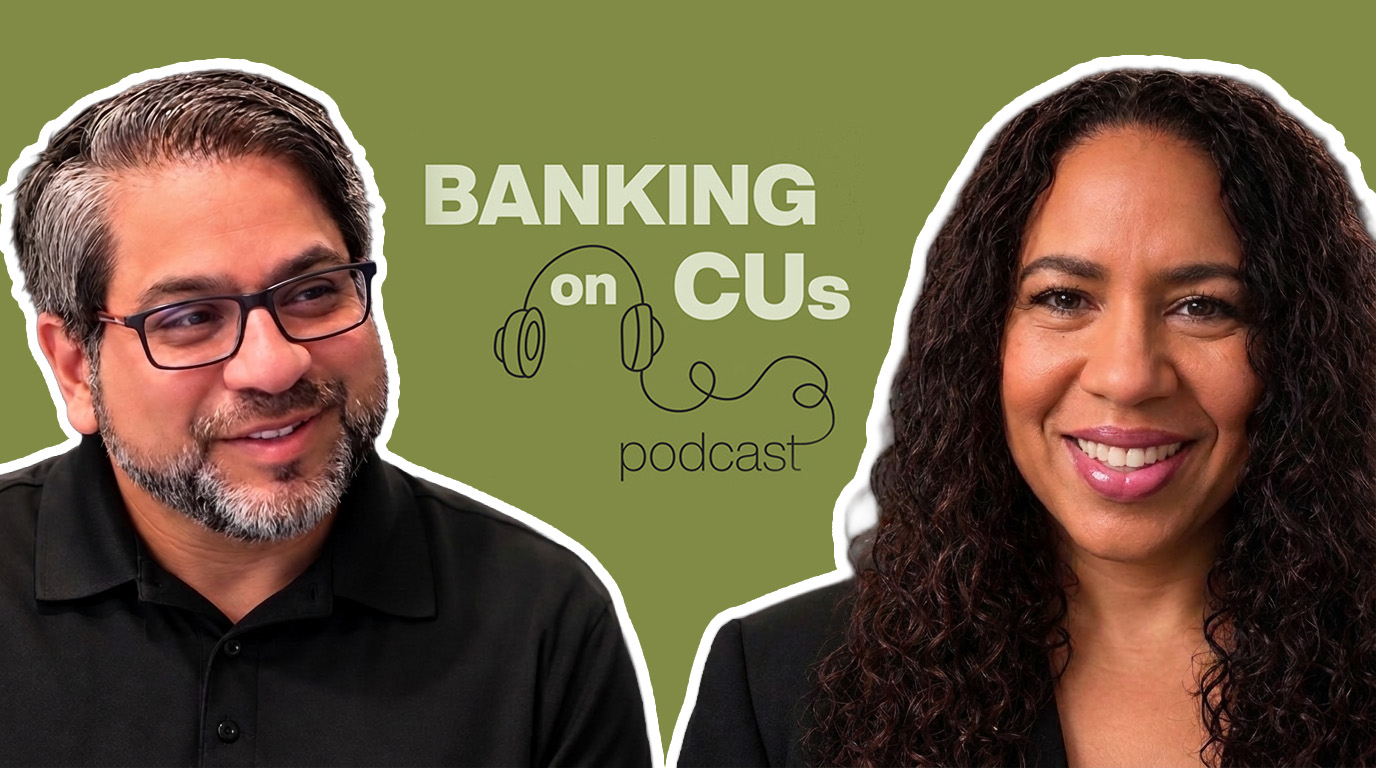
In this deeply personal episode of Banking On Credit Unions, host Josh Rodriguez sits down with Whitney Anderson, former CEO of Elements Financial, author, speaker, and leadership consultant, to discuss a journey that tested every part of who she was.
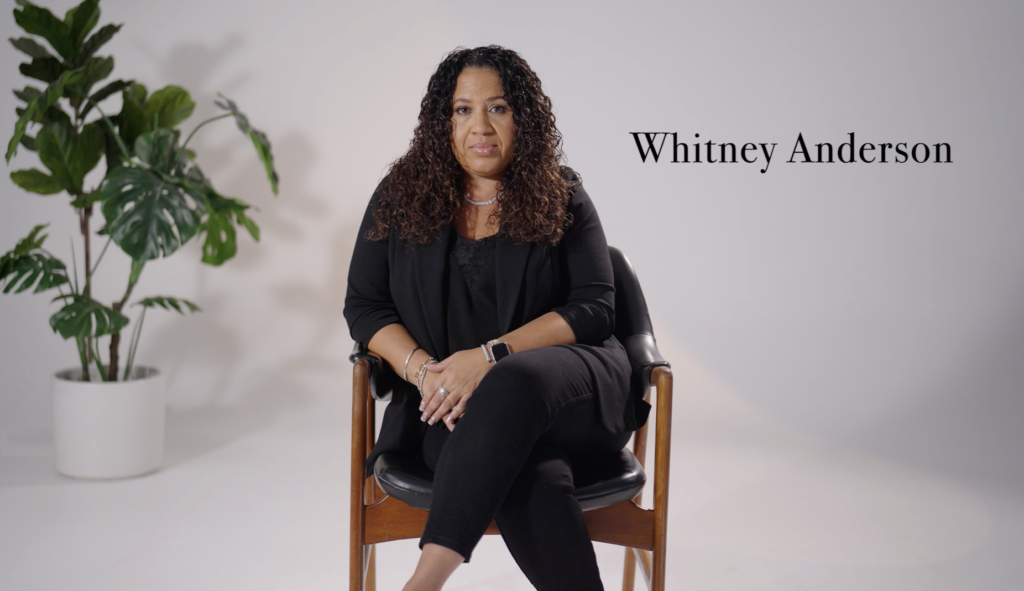
Whitney’s story begins like many credit union stories do. An internship leads to a lifelong career. Along the way, she builds relationships, develops leaders, launches successful initiatives, and ultimately achieves a lifelong dream: becoming CEO of a large credit union. But behind the scenes, Whitney’s personal life was unraveling.
This conversation explores leadership, vulnerability, resilience, faith, family, and the power of refusing to let someone else define your future. Most importantly, it’s a reminder that even when life knocks you down, you can keep moving forward. One step at a time.
She Walked Anyway: The Story of a Woman Who Refused to Stay Down
How to Listen:
Subscribe on your favorite podcast player so you never miss an episode:




Follow Banking on You Podcast for updates and past episodes:
Facebook | Instagram | TikTok | Threads | LinkedIn
Banking on You is powered by West Community and Tigers Community Credit Union.
Transcript
Josh Rodriguez
Hey, this is the Banking On You Podcast. I’m your host, Josh Rodriguez. Today we sit down and chat with Whitney Anderson. Whitney has an amazing story of resilience, grit, and overcoming unthinkable odds. After a career of working for various credit unions, she worked her way through barriers and obstacles all the way to the CEO position at Elements Federal Credit Union. In and of itself, an incredible historic achievement. And then, well.
I’ll let Whitney tell you the rest of the story. Let’s get to it.
All right, Whitney Anderson, welcome to Banking On You. It’s great to have you on.
Whitney Anderson
Thanks, I’m really excited to be here today.
Josh
Fantastic. Now, I have to tell you, I stumbled across your story in a wonderful way. I was, I believe it was on CUtoday. Actually, I need to look it up. CUtoday. There was a really great article. I remember, because it was a momentous occasion, when you became the CEO of Elements Federal Credit Union. This was two, three years ago. How long ago was that?
And I remember I’ve never met, we’ve never met before, but I remember you as you became the CEO. It was a fantastic thing. And then never really heard much after that. And there’s a reason for that. And so that’s kind of why we are getting together today. Whitney’s story is it’s one of, well, I’m not gonna give anything away. We’re just gonna dive right into it. So, Whitney, tell us a little bit about your history and how you came to credit unions because just about every credit union professional I talk with, didn’t intend to be here. They there’s a winding path, or it seems like it ac an accident at times, but there’s always a fantastic origin story to every CU professional. So just give us a quick rundown on how you came into the industry and then how you came to be the president CEO of Elements Federal Credit Union.
Whitney Anderson
Absolutely. Well, thank you for having me today. I am super excited to be here. And you’re right, my story is like the quintessential credit union story because I am originally from Michigan and I’m a big Spartan Michigan State fan. I’m from right in East Lansing. And one of the really cool things about that is I was the first intern in high school at Lansing Automakers Federal Credit Union.
And I had an amazing experience there as an intern. And when I got into college at Michigan State, I actually worked for MSU Federal Credit Union. And I had an amazing four years there, worked with so many wonderful people that I’ve always kept in touch with. And upon graduation, I had a marketing degree and I actually went to work for Kraft Foods for 13 years. So I spent 10 years in Atlanta and three years in Charlotte, North Carolina.
Where I had the opportunity to work with a lot of really amazing people. I worked with, I worked within sales, I worked in category leadership, and I had the opportunity to work primarily with Walmart and Target, which gave me a lot of really cool experiences. But overall, I had lost that impact with real people. And I found myself just kind of at this crossroads.
And I decided to go back to grad school. I went back and got my MBA at Wake Forest. And I would always go home for the holidays and I was trying to figure out what I wanted to do next. And one of the things that’s really important to who I am is building relationships and not just building them but keeping them. And I would always come home, I’d run into different individuals within the credit union and people from home and they would be like, Are you ever gonna move back?
And I was like, absolutely not. I’m not coming back to the snowbanks. I am not coming back to winter. And then I thought about it a little bit more.
Josh
Mac and cheese was the thing, right?
Whitney Anderson
Oh yes. Mac and cheese, Oreos, D’Jornos. I was I was slinging it off.
Josh
How could you leave that? How could you leave that? What what a what a life.
Whitney Anderson
know, right? My family’s still sad about the samples. when I went back, they were like, you know what? Would you really con seriously consider that? And I was like, after I thought about it a little bit and thinking about community and family and specifically my parents being there, I made the decision to interview for the position and I interviewed with April Clovis and at the time she was, when I knew her in undergrad, she was working in marketing and I was working in member services. And the CEO at the time was Pat, and he was VP of finance, and then he became the CEO.
So I really had an opportunity to see that credit unions really build from within. And all the individuals that I used to work with were there and they were doing all these amazing things within their career. And I was like, you know what? I’m gonna do this and I was super excited to have the opportunity to get that role.
One of the things that really brought me to credit unions was there was one specific moment where I was working, it was my first week in undergrad, and I had on some logo wear, and I went to the East Lansing Art Festival, and I was just walking around. I had just done a volunteer shift. And as I’m walking, this lady comes running up to me and gives me a hug, and she’s like, You changed my life.
She’s like, you gave me a mortgage when no one else would. And I was like, oh my God, who’s this lady? But after that, I was just really struck by the moment of what credit unions do and how people helping people is a real thing and that we have a real impact on individuals’ lives.
Josh
Right, right. It’s not just something we say, right? It’s not just a saying, it’s not just a phrase. It’s I mean, it sounds cliche, but it’s really at the heart of what we do and it goes deep with those of us that have been in the industry for a long time. I tell people often, and I’ve been in the credit union industry for like twenty-three, twenty-four years.
I would never h have even gotten into banking if it wasn’t for the people aspect. I really was not interested in banking at all. But I got bit by the bug as a a phone teller twenty some years ago and it just wouldn’t leave me alone. And so that’s why I’ve, you know, stuck with it all this time. It’s a great, great movement.
Whitney Anderson
It has like a real impact on you as a person because you get to see real people and making changes for their lives for the better. And you never even realize how much impact you have. I had an individual reach out literally just as my book was coming out and saying he was excited to support me and get the book and he remembered it was literally ten years ago I helped him work on his credit score.
And talked about financial literacy and how to make, you know, how payments affect it and how paying your payment every month and keeping your balance below a certain percentage and all these different things. And he reached out to say he was gonna buy my book and that his credit score was right below eight hundred and he had listened to everything I said and the impact. And it’s those moments where you really realize you know, every little thing that we do, people are listening, even when it seems like maybe they’re not, or they ask a question and we answer. But it’s it was a very heartwarming moment to me. And it’s awesome. And to keep that with me.
Josh
Life changing. Life changing. Yes. Not every story goes that way, unfortunately. However, there are so many and those ones that come back years later, they just they just warm your heart. I mean, it’s just a fantastic experience. So good.
Whitney Anderson
Yes, so those are some of the reasons that I was excited to start my career at MSUFCU. I was there for seven years. I started out as vice president of sales and financial education. And through different positions, I had the opportunity to work with member services, business development. I was able to help I start the Deskdrawer Fund, which is the foundation at MSUFCU, and Evergreen 3C, which is one of the CUSOs at MSUFCU.
And also Collegiate Credit Union, which is one of the trade names for MSUFCU. So I had the opportunity to work for someone who really gave me the opportunity to like have ideas and like see them come alive. And April is an amazing human and she gave me that opportunity. I then started doing some public speaking within the credit union industry and I was eventually recruited after being at MSUFCU for seven years. I was eventually recruited to be CEO at Elements Financial, which was one of my dreams to be a CEO. Becoming a CEO there made me the third black woman to be a CEO at a large credit union. That’s incredible. And so it was a lot of pressure from a lot of different ways.
When I started there, it was absolutely just the most amazing feeling coming into an organization where you really believe in the mission. You see all these amazing people. I moved to Indianapolis and started down this amazing road of building something with great people. And of course, then it’s the most unprecedented rate hike season that we have seen in the United States where the rates were all over the place.
Josh
Before we go, let me, I’m sorry, let me interrupt you here real quick. So you mentioned you were one of the or you were the third African American woman to become the CEO of a large credit union. Tell us a little bit more about those challenges. And you know, being the one of the first, everybody wants to be first, right? But there’s a special set of pressures that, especially in this type of a situation, that comes with being one of the first. What was what was that like for you?
Whitney Anderson
I remember my sister saying, my God, you’re like a trailblazer And I was like, I hadn’t really thought about it like that ’cause I was just so focused on working towards getting the job and then feeling the pressure of what that actually means and then having so many people reach out and say, like, I didn’t know you we could do this and seeing you up there in that position gives me hope for my kids and you know my family and all the support that they provided. It was a really profound moment for me because it just it was there was a lot of joy and happiness, but also there was this moment of my God, the pressure is on and like I can’t mess this up, I can’t make a mistake, everything has to be perfect. And it was a lot of pressure. I’m not gonna lie, it was a lot of pressure.
Josh
Yeah. Unfortunately the one leading the charge also gets most of the arrows, right? And so yeah, so that I can imagine that was difficult on multiple levels. Running a credit union is tough work anyway. Tons of pressures. And like you said, the economic instability that happened, something we’ve never experienced before, at least in the modern era, you know, it’s it was it was a challenge for all credit unions. But you weathered that. You came through it, right?
Whitney Anderson
One hundred percent. And you know, it was really amazing because not only did we weather it, we grew twenty percent. And for a two point five billion dollar credit union in the midst of so much change with a new CEO coming in, that was a huge win for us. And it was something that we as a leadership team really focused in on and then executed against. And I am super proud of the work that was done at that point.
It was a really amazing two years working there. Throughout that time frame, you know, with the pressures, I have two young children. So at that time I had two little ones under five and was married and during that time one of the toughest things, which I talk a little bit about in my book, is the impact of our life and what’s going on outside. You know, you have this really big job and all these responsibilities and all of these assets that I’m over and all these individuals and their money and their financial well-being, the pressure becomes a lot. And you spend a lot of time at work and focusing in and then trying to balance family and friends, something that a lot of people don’t talk about. And I think we should talk about those things more because it really can have an impact on everyday life.
Throughout that process, I found out that my husband at the time was having affairs and it was one of the most tough times of my life because it’s embarrassing. I had like this what I thought was this amazing family and the perfect family, you know, just like we all talk about with the husband, the two kids, the white picket fence, all the things. Right, right. And I just had gotten my dream job and things are going well despite all the economic uncertainty and trying to build something for, you know, my girls and my legacy. And to find that out was just like unbelievable. But, you know, many times we just have to put a smile on our face and keep going. And that’s what I did.
Josh
Were you able to share that with anyone at work? I mean, this the the corner office can be awfully lonely. You’re not supposed to show vulnerability, but you’re supposed to be vulnerable. Right. You’re not supposed to show weakness, but people need to see authenticity. There’s this tough balance that exists there. And it oftentimes I think we put leaders on the on the wrong pedestal because they’re humans like everyone else. They experience things outside of work. They experience personal issues. And oftentimes you can’t bring those to those that you work with. They can bring things to you all day. You know, I can’t tell you how many times somebody sat across a desk and just cried their eyes out and left and they felt better. And I’m just like wondering, okay, what just happened? But you can’t do that the other direction. So how did you deal with that internally with your daily work?
You know, putting on a brave face, which we all have to do as leaders at times, but an extremely difficult situation for you. How’d you get through?
Whitney Anderson
It was really hard. I think I just tried to hold it all inside. I think people ask me sometimes like, Are you okay? And I would be like, yeah, you know, just life and all the crazy things, but everything is good. And eventually I did tell my chief HR individual what was going on and she was just like, I was wondering what was happening. And after I started kind of going through the process, I eventually told my executive team. But it’s very embarrassing and you feel just betrayal and then to have to share and be vulnerable about that, with individuals that I was just getting to know and building relationships with, just felt very difficult.
But I kept pushing through and as, you know, like many divorces, it took quite a while to work through. But about two years into the job, I was not feeling well one Friday and it was the Friday after Thanksgiving. I just felt a little funny and I could not understand what was going on. I was like, you know, maybe I pushed too hard over the holidays ’cause I’m the person in my family who hosts all the things and I love doing that. And I just hosted all of my like large family for Thanksgiving. And I just figured maybe I was tired. And I left work a little bit early just to go lay down. And thankfully my mom had stayed in town from the holiday because we were planning to go have like a girls’ day on that Saturday. And I just went home and laid down.
And when I got up, I was like, gosh, I really do not feel right. So I called u utilizing the great Credit Union insurance. had called the Teledoc number and they were like, you should probably go to the ER when you when they heard my symptoms. And I was like, I’ve never been to the ER. I don’t think I need to go to the ER. Well, about four or five o’clock that morning, I was like, woke up my mom and I was like, Yeah, so we’re gonna need to go to the ER.
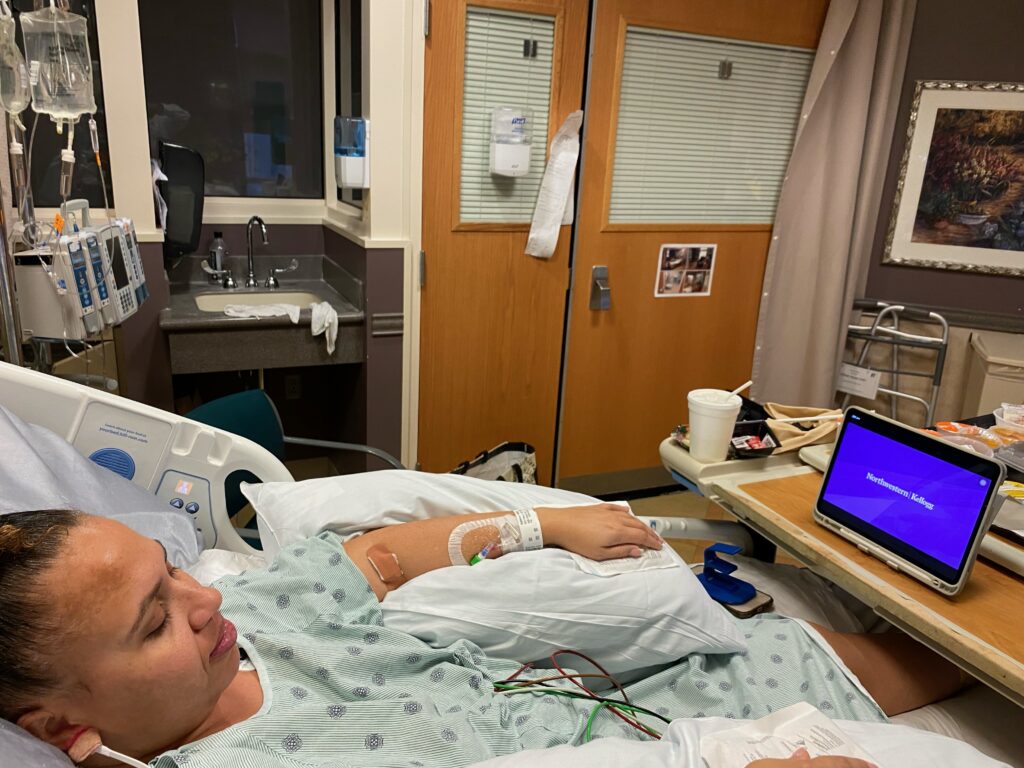
Went in, spent the day there, they told me I had a virus, I had an IV, they were like, you were a little dehydrated, just make sure that you drink enough water and rest. And I went home that night and after spending the day there and by the next morning around the same time I just it was even worse. If my mom would not have been there, I would not have been able to make it to the car. And I got to the hospital and went into the ER and by the next day I was completely paralyzed.
It was unbelievable. It just seemed like a bad dream. Like this can’t be happening. Like I was just at work on Friday and Monday I’m completely paralyzed. I still could breathe, but I had like no ability to move my arms, my legs, my torso, anything. Being in the ICU, I remember after like a couple weeks they figured out that I had Guillain Baret syndrome.
And it’s essentially where you have a virus and then your nervous system attacks or excuse me, then your immune system attacks the nervous system like it is the virus. And so it’s very painful. And if it goes into your lungs, you do not have a good chance of making it. I was told at that time, you know, Whitney, my neurologist, was like, You’re gonna have to get used to being in a wheelchair. And I was like, No, that’s not my story. That is not my story. And he looked at me like I was crazy and he was like, Whitney, I need you to wrap your mind around this. And I just remember looking at him and telling him, like, you don’t even know me. How do you get to define the rest of my life?
Josh
So at at this point you’re a single mom having gone through the divorce or still in still out so you’ve got two young two young daughters or two young kids and I assume you’re like in an ICU or something like that. So were you able to see your kids at all? How is…
Whitney Anderson
No, and that’s where my family comes in. I have like the best mom in the entire world. We can laugh about it now that she came for Thanksgiving and stayed until Easter, but she never left my side. I never spent a night alone in the hospital and one of my sisters came, Claire, and she also stayed. I literally was never alone. My mom is just my rock and just help me get through the hardest thing I’ve ever been through. And for my girls, because I was in the ICU unit and then I went to the rehab hospital of Indiana after that. And that was also considered ICU and you had to be eighteen or older to come in. So to my girls, I went to work on Friday and I never came home. And we were able to FaceTime or wave out a window and it was h horrible. They were hysterical and upset. And, you know, staying with my family or my ex, you know, as we navigated all this difficult time. I had individuals from my executive team coming up to the hospital while I was still making decisions for the organization.
Josh
So still functioning as CEO during all this. Wow.
Whitney Anderson
And it was it was a really hard time in life getting the to the point where I made it to the rehab hospital and I started going through a lot of the therapy and I eventually thankfully am here still today and I’m walking and when I met my
with my neurologist for my last appointment. He was like, Well, I don’t even know what to say to you because you’re just a miracle and I can’t believe that you made it and you did everything as my case was so serious and severe.
Josh
Do you attribute your recovery to hard work? I mean, what went into that for you to overcome? Because this is something I mean, it really is a miracle. It really is miraculous here. You shouldn’t be, you know, you shouldn’t be mobile. You shouldn’t be, we shouldn’t be talking right now, right? There should according to the experts. So what do you attribute that to? That’s just incredible.
Whitney Anderson
I think, you know, it’s my faith and family and hard work and never giving up. I remember having to literally talk to my body to tell it what to do, whether it was like trying to learn how to comb my hair again or you know stand up, how to brush my hair, brush my teeth, put in my contacts, all these little things I had to be like Okay, hand, go over, like you can do this. Let’s pick it up. Put your fingers together. Like I literally would talk it through with my body. And I had the most amazing care team as well. The nursing staff at IU Health and the Rehab Hospital were just absolutely amazing. And I asked them as well, like, push me. I and I pushed so hard every single day. And my sister was my DJ or my mom was my DJ. They would have like a little speaker hooked on like my chair. And when I started the process of like trying to get your body used to walking and it’s like you’re hooked to this huge robot. All the way down to like your hands and your arms and your fingers are put in this thing and you’re feeling what it feels like to walk like with a robot.
And I just remember like thinking like I am going to do this. And I remember the day that, you know, you had to be able to like open a car door and you if you fell, you had to be able to get up off the floor. Those were some of the things that you had to do to be able to get out of rehab. And after like all of those weeks of, you know, two or three times a day going and going into physical therapy and trying to learn how to do all those things again. That day when I got to ring the bell and made it and I walked out. It was, I’ll never forget the moment.
Josh
o you literally had to reteach yourself all of your motor skills. It was just from the baseline of no movement at all to fully functional. One hundred. tell me about the reunion with your daughters when you finally get out.
Whitney Anderson
My family was all at my house and they had like planned like a little surprise party. And it was just absolutely amazing. They just ran over and we just hugged and hugged and hugged. And it was actually a really tough time for my girls because it took them a long time to work through like, wait a second.
You’re going to work, are you gonna come home and to work through that trauma? And I would say it probably took like at least a good year for them to like be okay with me going to work and understanding once that transition happened and I started going back. And it was just one of the most difficult times. When I look today at them and how resilient children are.
They’re doing great and you know, we can talk about all these things and you know, we’ve done all the hard work.
Josh
Yeah, I can imagine as shocking an event as that was, you going back to work, they have to be thinking, is this gonna happen to mom again? Are we gonna go back through this? That’s gotta be really tough. So you mentioned previously that when I’m not sure if it’s when you’re in rehab or when you were in the original ICU, you started making audio recordings. So tell me a little bit about that.
Whitney Anderson
Goes back to my amazing mom. She’s like, you need to like record how you’re feeling throughout this process. And even if it’s just a small recording, just put it down and think about those things. She’s like, because I think it’ll help you as you work through all of this. And at the beginning, I was like, I don’t know. It was just so overwhelming. I could hardly think about doing anything else other than just trying to make it. But I did do it. And, you know, writing the book was one of the most cathartic things that I’ve gone through, like going back and listening to some of those and then thinking about, you know, starting to put pen to paper. And I’m so thankful that my mom made me do that and that I then had the opportunity to write the book and talk about a lot of things that women often, well, not even just women, people don’t talk about, which, you know, as we move through leadership and have these personal challenges and the impact on that, it’s just a hard thing to face. And so I’m super thankful that I had the opportunity to have some of those recordings and see some of those things written down by my family.
And then to go back and that really helped inspire the book. I had, you know, my amazing aunts who called me to pray every single day at seven o’clock. I mean, it there’s so many people that came and having some of those recordings and those videos and those pictures and those moments, those are some of the things that have helped me like understand how people were really there and the impact. One of the things I often talk about is there’s an old song that’s “give me my flowers while I’m still here.” And I had the opportunity, being so sick, to see so many people like sending flowers and cards and making such an impact on my life that I felt like I had that moment where people give you your flowers and you can see the impact that you’ve had on other individuals’ lives. And it was a very, very profound moment for me.
Josh
Yeah. That has to be a huge boost to your motivation to continue.
Whitney Anderson
Yeah. One hundred percent. Yeah. And my nurses were like, Who are you? Are you famous or something? You have so many flowers, you have all these cards. I was like, yes, I’m famous.
Josh
So famous. That’s funny.
So so you wrote the book and it was it came out just a few
Whitney Anderson
Yes, yes it did. It just came out, August fourth.
Josh
So what does that feel like? So did you have you ever thought about writing a book previously? Or is it something
Whitney Anderson
I never had an idea like that. I literally, so fast forward like through the time of being sick, I was still having a really hard time. And I made the tough decision to step away from being CEO at Elements to focus on my health throughout that whole timeframe. And the title of the book is “She Walked Anyway.” And that really goes into so many different things. So one, being told I wasn’t going to walk again, two going through betrayal and heart and heartache and so many different things and like being able to walk away from that. Like there’s so many different meanings as you work through like the grief process and like so many different things that the book helped me. And the recording helped me work through all of that. And I took about a year to write the book. And that’s when I did that. And I started my own company, Anderson Growth Advisors. And I started consulting with credit unions and just doing some amazing things with organizations that, you know, get back to the root of who I really am and my purpose.
And the book just helped me bring all that together. And it has been an amazing experience to go through that and then to see it come to life. There was like a huge moment of vulnerability because I hadn’t really talked a lot about the divorce or like even my sickness up until then. Like the people that knew, they knew, but you know I just kind of like went into like this like shell when I was in the hospital because of course I couldn’t text or call anyone. Someone had to do all those things for me. And so it was it was a really crazy experience. And now to go back and like see the book and read the book, I’m like, my God, I did it. We’re thankful.
Josh
Yeah, yeah. Congratulations.
Those that hear your message, w what what do you want them to hear from your story?
Whitney Anderson
I think one, there’s a few things. So one, I have a very unique path to CEO. And so I always talk about, you know, you don’t just have to do ABC or one, two, three to get to the position that you have as your goal. There, you know, you work hard and you you don’t say no to what you’re asked to do and you are open to different ideas and challenging yourself in different ways, you’re gonna get there where you want. And the other side of that is like we all have these things going on in our lives and I think it’s important to start talking about it sometimes because oftentimes when you’re going through all these things you feel alone and isolated. And I think just knowing that you’re not alone and that there are people who care about you and want to be there for you makes such a difference in the healing process and at the end of the day like the biggest thing I tell people is just keep walking, keep going, keep pushing forward.
Josh
I love the phrase you mentioned earlier. That’s not my story. Take control of the future.
Whitney Anderson
Don’t want other people to find you. Absolutely.
Josh
Right. Right. Get up get up and walk. Yes.
Wow, what an inspiration. If someone you know is struggling right now and could use some encouragement, why don’t you go ahead and send him a link to this episode? Whitney’s new book, She Walked Anyway, The Story of a Woman Who Refused to Stay Down, was released in August and is available wherever you buy great reads.
Thank you for listening to the Banking On You Podcast. There’s just one more episode left in season two, so please subscribe and follow us on all the socials at @BankingonYouPod to make sure you don’t miss the finale. Banking on You is powered by West Community and Tigers Community Credit Union. I’m your host, Josh Rodriguez. Catch you next time.